
Finocket for Jewellers
Bill gold by weight, karat and today's rate
Enter the morning's rate once. Each bill works out metal value, making and wastage, prints the HUID, and lands in your GST books the same day.
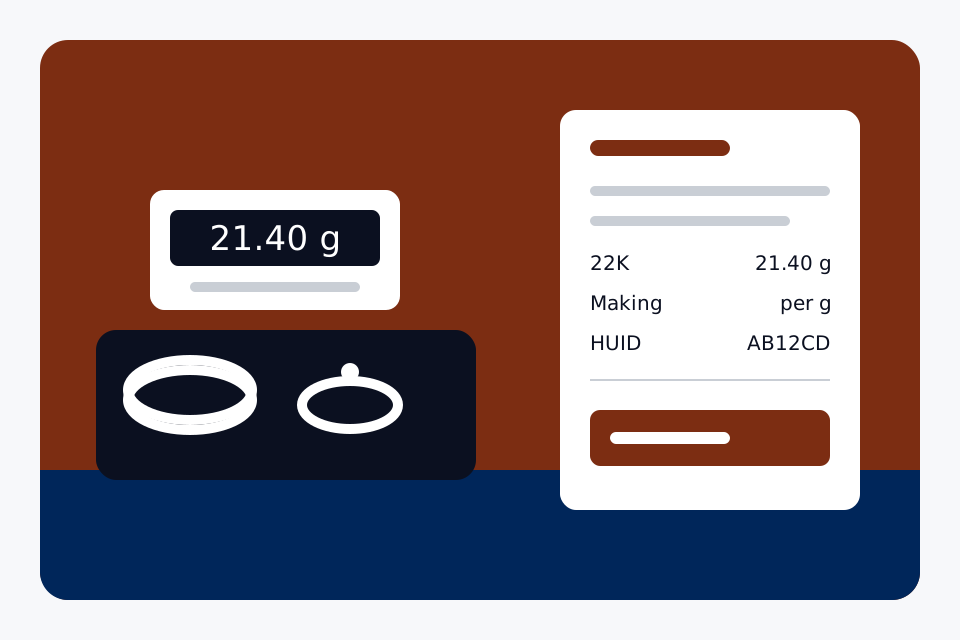
The problems we fix first
Pricing every piece by hand from the morning's rate
Today: The rate is chalked on a board or sent on WhatsApp, and the salesperson multiplies weight by rate on a calculator, then adds making and wastage.
With Finocket: Enter the rate once a day. Each line is priced from metal, purity, net weight, making and wastage, and an old rate is flagged before you bill.
Making and wastage hidden inside one figure
Today: The bill shows one total per piece, and the breakup is explained verbally at the counter.
With Finocket: Making and wastage show as separate amounts, and making and hallmarking come in as charge presets you can edit.
HUID written in a register, not on the bill
Today: The six-character HUID is copied from the tag into a notebook or typed into the bill description.
With Finocket: Purity and HUID have their own columns on each bill line and print on the jewellery template. Tying a HUID to a piece in stock is not built yet.
How it works, end to end
- Daily rate
- Purchase and bullion
- Stock and tagging
- Karigar job work
- Sale at the counter
- Old gold exchange
- Billing
- Repairs
- GST
- Collections
- Customer follow-up
- Accounts and reporting
Built for
- Single-showroom jewellers with 1 to 15 people at the counter
- Goldsmiths who send metal to karigars and settle wastage
- Silver and gold retailers who take old gold in exchange
- Shops that keep a jewellery package next to Tally and want one set of books
- CAs who look after jewellers' GST
What you get
Karat pricing at the counter
Pick metal and purity, enter net weight, and the line is priced from the day's rate. Making can be per gram, a share of metal value or flat per piece.
Daily metal rate
Type today's gold, silver and platinum rates once. Every rate is kept with its date, and a stale rate is flagged before you bill on it.
HUID and purity on the bill
Purity and the six-character HUID print on each invoice line of the jewellery template.
Gross, net and stone weight
Record gross and net weight in grams and stone weight in carats on every line sold.
Old gold in exchange
Weigh and value the customer's old gold, set it against the new bill, and post it as one balanced entry.
Karigar job orders
Issue metal to a karigar, receive the piece, record wastage and settle. A karigar paid per job is a vendor in your books.
Repairs desk
Take in a repair, assign it, track it to delivery and bill the work.
GST and books
Making and hallmarking come in as charge presets you edit. Bills post to double-entry books, and GSTR-1 and GSTR-3B are prepared from them.