

Online store · Beta
Run your own shop, from inside Finocket
Choose a look, write your pages and policies, point your own domain at it, and publish — your storefront, managed from the same account as your books. Currently in beta.
What it solves
Opening a shop online usually means hiring somebody: a theme to install, pages to write, a domain to point, and a second system that knows nothing about the stock you already track. Everything is somewhere else, and every change is a ticket. The storefront console puts the whole of it on screens you can use yourself — the look, the pages, the address, the catalogue — in the account that already holds your items and your invoices.
How we're different
The design is data, not code. You pick from themes we ship and adjust colours, type and spacing as values we validate — so nothing you type can break your shop or anybody else's, and there is no per-shop deployment to wait for. Pages are built from sections you arrange rather than a template language you have to learn. And the catalogue is your existing item master, not a second copy of it that drifts.
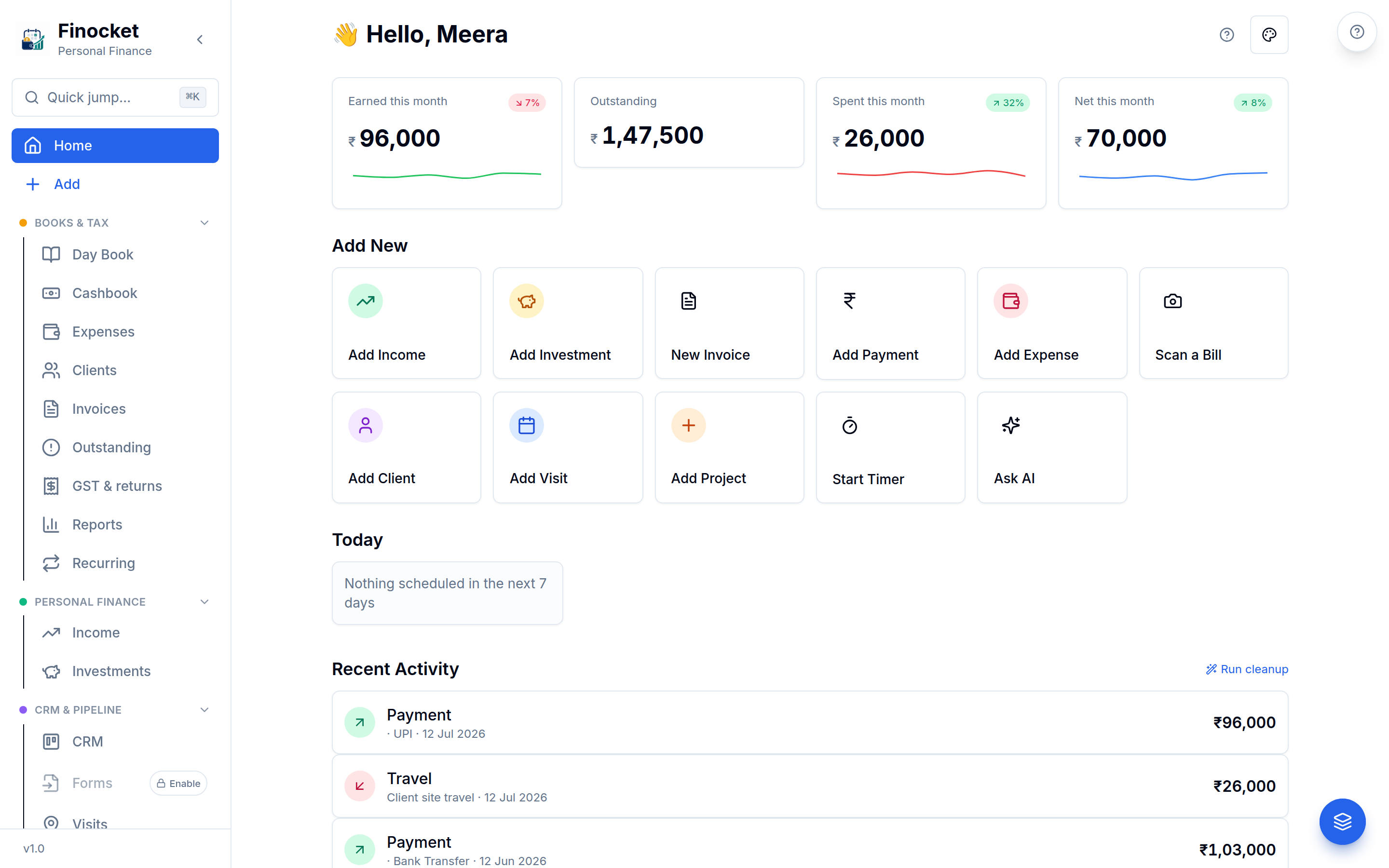
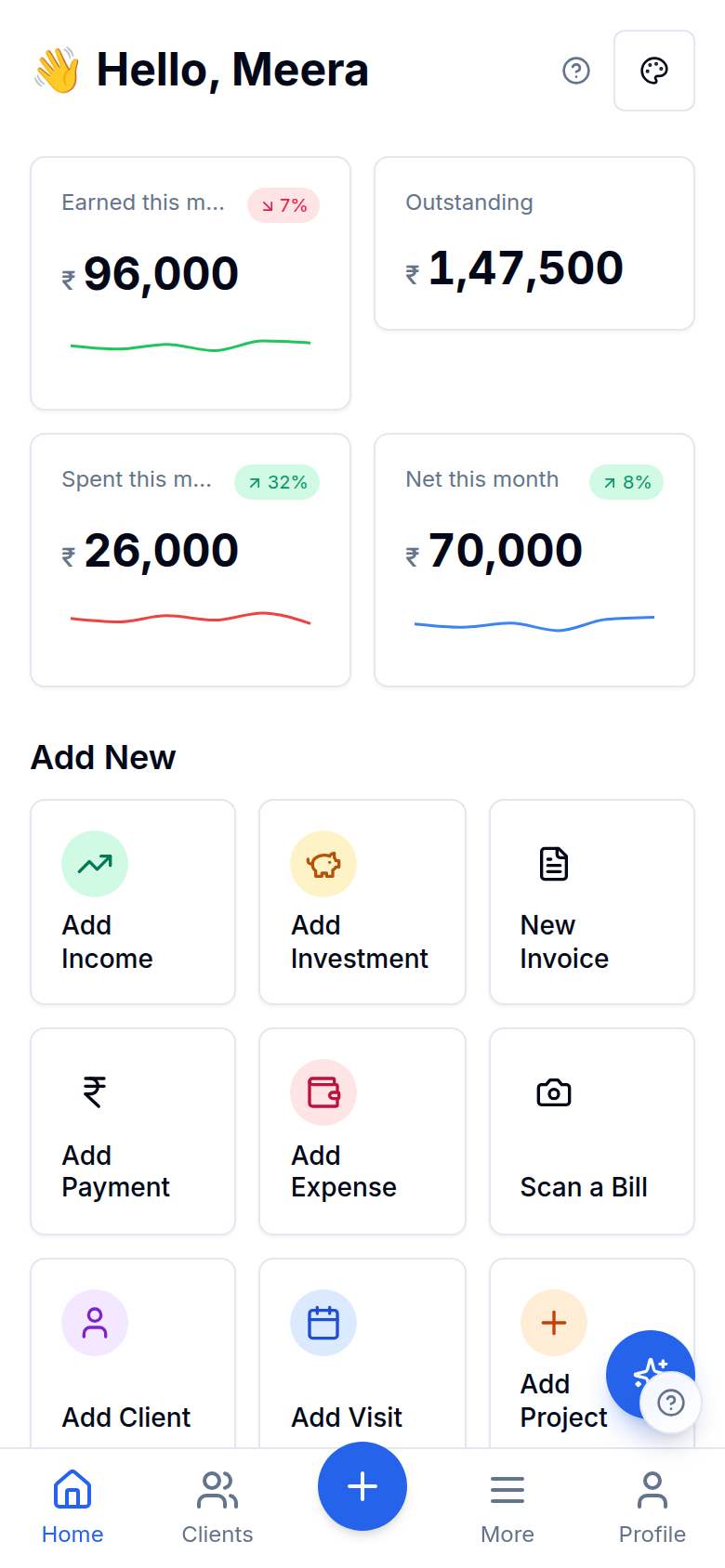
Inside Online store
Pick a look, then tune it
Write your pages and policies
Online store
Write your pages and policies
Your own domain, verified
Online store
Your own domain, verified
Publish when you're ready
Online store
Publish when you're ready
Online store
Write your pages and policies
Online store
Your own domain, verified
Online store
Publish when you're ready
Works with the rest of Finocket
Part of CRM & pipeline. See how every module connects.
Questions
Do I need a developer to open a shop?
No — that is what this module is for. Choosing a theme, writing pages, connecting a domain and publishing are all screens in the app, and none of them asks you to write code or edit a file.
Can I use my own domain name?
Yes. Add the hostname you own, add the DNS record the console shows you, and press verify. The console tells you exactly what it found — verified, no record yet, or a record that does not match — and it will not let a domain that has not been proved become your shop's address.
Does this replace the marketplace hub?
No, and it is not meant to. The marketplace hub reconciles what you sell on Amazon, Flipkart and quick-commerce as finance. This is your own shop on your own address. Plenty of businesses want both.
Is the shop's checkout part of this?
Not of this module. This is the merchant's control surface — theme, pages, domain and catalogue. Carts, checkout, payments and shipping are separate parts of the commerce programme, and the console says plainly which of them a shop can and cannot do today rather than implying they are ready.
Learn how it works
Your online store
Open a shop of your own without a developer: create it, choose how it looks, write its pages and policies, decide how often it refreshes prices, connect a domain you own, and publish when you're ready.
CRM & deals — pipeline, follow-ups and the customer ledger
Work a sales pipeline inside your books — auto-created deals for every captured lead, one-tap invoicing from a deal, follow-ups on WhatsApp or email, a per-client money ledger, and consent-safe lead import.
Leads — capture, score, route and respond on time
Every enquiry — form, QR, booking, WhatsApp, call, email, SMS or voice note — lands on one deduplicated Leads board, gets scored A–D, assigned to a teammate, and started on a first-response timer.
Ready to ditch the spreadsheet?
Free for solo users. No credit card. Your books stay yours.