
Finocket for Agri Mandi
Your mandi bills and books, on the phone you already carry
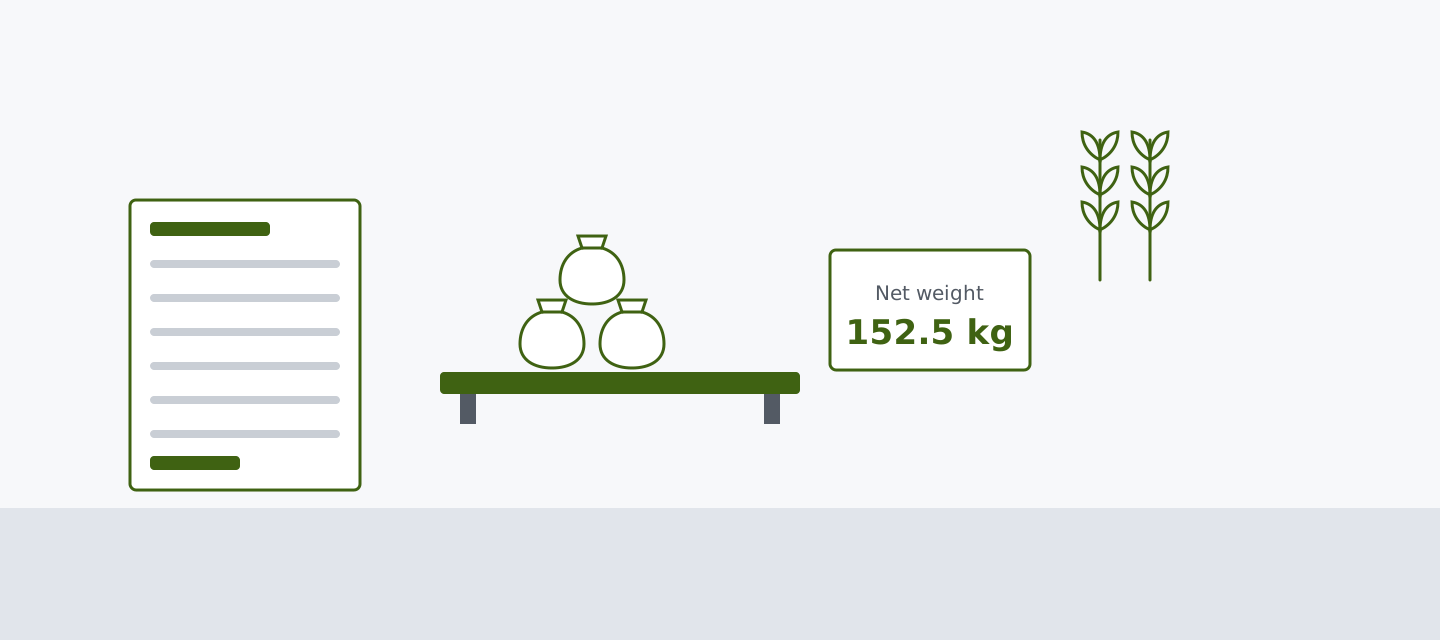
Raise a sale bill with lot number, bags and net weight on each line, keep farmers and buyers in separate ledgers, and hand your CA GST-ready books. Arrivals, auction entry and farmer patti are being built and are marked as not yet available.
Join waitlist (not yet)Not available yet. Join the waitlist and we will tell you when it is.
The problems we fix first
The same sale is written twice: a kaccha parchi at the auction, then a pakka bill for the buyer.
Buyer dues live in a notebook and are chased by phone.
One party list holds farmers and buyers together.
Today: Names are kept in one register, and the munim remembers who is a seller and who is a buyer.
With Finocket: Each party carries a role (farmer, buyer, agent, trader, transporter), with village and member code.
How it works, end to end
- Arrival and gate entry
- Weighment
- Auction and sale
- Purchase (own-account trade)
- Stock
- Billing
- Dispatch
- GST
- Collections
- Farmer settlement
- Accounts and bank
- TDS
- Reporting and CA
Built for
- Commission agents (arhtiya, aadhati) in grain and sabzi mandis
- Mandi traders who buy on their own account and resell
- Munims who write the day's bills
- CAs who keep books for mandi firms
Questions owners ask
- Does Finocket pay farmers for me?
- No. Finocket does not pay farmers. You pay from your bank or in cash and record the payment in Finocket.
- Are these prices final?
- No. They are draft prices taken from Finocket's standard plans and are awaiting an owner decision.
Other trades on Finocket
- DairyBulk milk bills, member ledgers and GST books for village dairies.Early access (demo only)
- FMCG DistributionBilling, stock, retailer dues and GST for FMCG distributors and super-stockists.Early access (demo only)
- Pharma DistributionBilling, batches, receivables and GST for stockists, C&F agents and pharma wholesalers.Early access (demo only)
Part of Demystify
Finocket is a product of Demystify Systems, and it runs on the Demystify OS platform.